
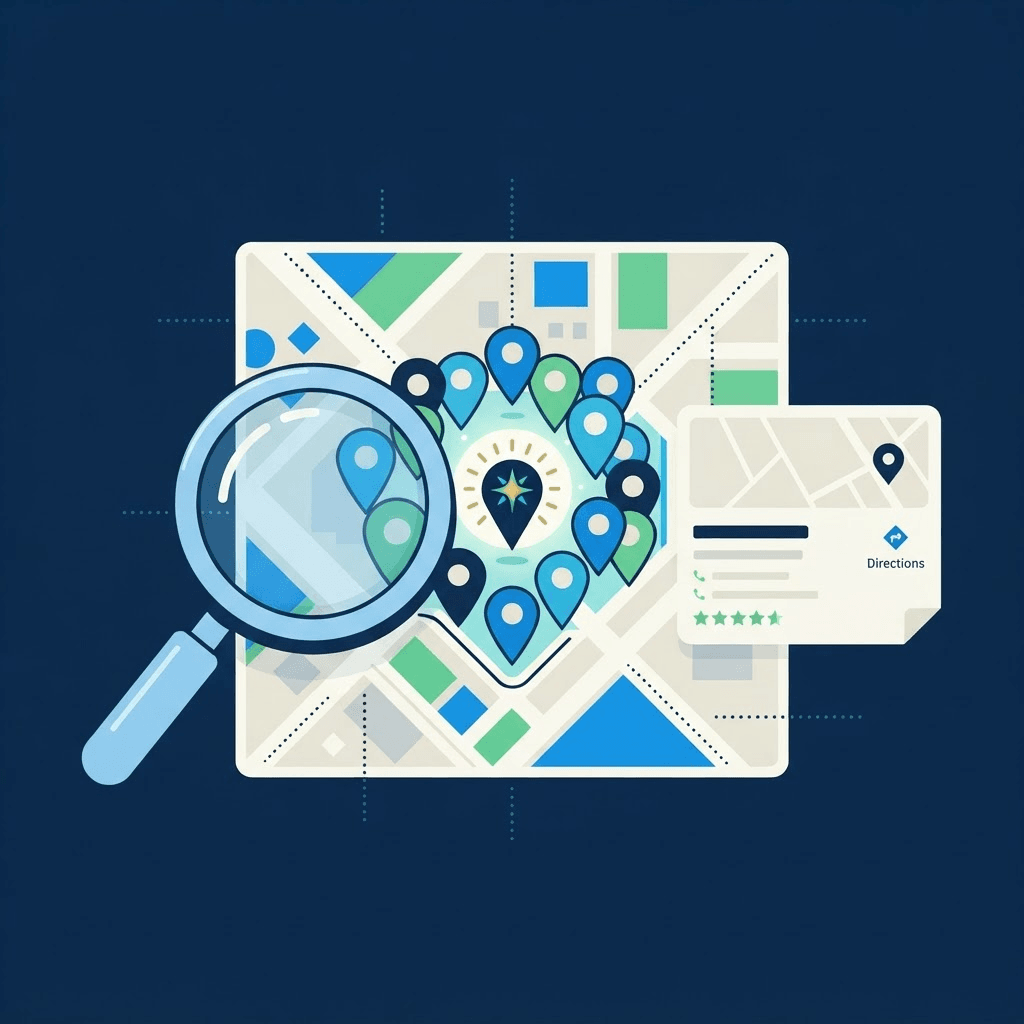
When someone nearby searches "plumber near me" or "best dentist in Wausau," Google decides in a fraction of a second which handful of businesses to show. Local SEO is the work of becoming one of them. Done well, it produces the most valuable traffic a local business can get: people who are close by, ready to act, and searching for exactly what you do.
This guide walks through every part of local SEO in the order we tackle it with clients. If you'd rather have us handle it, our Local SEO service covers all of this, but everything here is something you can start on today.
The short version
Local ranking comes down to relevance, distance, and prominence. You influence relevance with your website and profile, and prominence with reviews, citations, and links. Distance you can't change, but strong signals help you win beyond your immediate block.
Start with your Google Business Profile
Your Google Business Profile is the single most important local asset you have. It's what powers the map pack, the box with three businesses that appears above the regular results. For most local searches, that box gets the majority of clicks.
At minimum, your profile needs the following handled correctly:
- Accurate business name, address, and phone number that exactly match your website
- The most specific primary category available for what you do
- Complete services and product listings with descriptions
- Real photos of your team, work, and location, added regularly
- Hours that stay current, including holidays
- A steady flow of new reviews with owner responses
If your profile is incomplete or you never post to it, you're leaving ranking and calls on the table. We break profile work down step by step in our post on Google Business Profile optimization.
Get your website's local signals right
Google still reads your website to understand who you are, what you do, and where you do it. A conversion-focused website that's also technically sound gives you a huge advantage over competitors running dated sites.
Create real service and location pages
One thin "Services" page won't cut it. Each core service deserves its own page that genuinely explains the work, the problems it solves, and what a customer can expect. The same goes for the areas you serve. Our service area pages are a good example of giving each city its own substantial, useful page rather than stuffing a list of town names into your footer — see how we approach it for local SEO in Janesville, Appleton, and Milwaukee.
Nail the on-page basics
- Title tags that include your service and city where it reads naturally
- One clear H1 per page describing that page's topic
- Descriptive, benefit-led copy written for humans first
- Fast load times and a layout that works on phones
- LocalBusiness schema so search engines can parse your details
A redesign shouldn't cost you rankings
If your site is overdue for an update, be careful: a careless rebuild can tank hard-won rankings. Our website redesign process maps redirects and preserves SEO equity. More on the warning signs in our post on when to redesign.
Build prominence with reviews and citations
Prominence is Google's sense of how well-known and trusted you are. Two levers move it the most for local businesses: reviews and consistent citations.
Reviews are the highest-leverage thing most businesses ignore. A steady stream of recent, genuine reviews improves both ranking and the click-through rate once you appear. We wrote a full playbook on getting more Google reviews without feeling pushy.
Citations are mentions of your business name, address, and phone number across the web, in directories, associations, and local listings. They don't need to be exhaustive, but they do need to be consistent. Mismatched addresses and old phone numbers quietly undermine your ranking.
46%
of Google searches have local intent
3
businesses shown in the map pack
88%
of local mobile searches lead to a call or visit within a day
Those figures come from Google's own local-search research and BrightLocal's annual Local Consumer Review Survey — the two most widely cited primary sources on how people find and choose local businesses. Treat them as directional rather than exact; the point is the scale of local intent, not the decimal.
What this looks like across Wisconsin
We do this work for real Wisconsin businesses every week, and a few patterns hold almost everywhere. In smaller markets like Phillips or Manitowoc, the Google Business Profile alone often decides who gets the call, because there simply aren't many competitors doing the fundamentals well. In competitive metros like Milwaukee, Madison, and the Fox Valley, the profile is table stakes and the winners separate themselves with genuinely useful service and location pages plus a steady review habit.
The other thing we see constantly: businesses treat local SEO as a one-time setup, drift for six months, and wonder why a competitor passed them. The pages that hold the map pack are the ones being maintained. If you want the same fundamentals applied to your market, our local SEO service and service-area pages show exactly how we approach it city by city.
Measure what actually matters
Rankings are a means to an end. What matters is calls, direction requests, and form fills. Set up call tracking and form tracking so you can tie real leads back to the work you're doing. If you can't tell which efforts produce customers, you're guessing, and guessing is expensive.
The businesses that win locally aren't doing one magic thing. They're doing the boring fundamentals consistently while their competitors do them once and forget.
Putting it together
Local SEO isn't a single project you finish. It's a compounding habit: an optimized profile, a genuinely useful website, a steady review flow, and consistent measurement. Start with your profile, fix your website's local signals, and build reviews from there.
Want to know exactly where you stand? A free marketing audit will show you your biggest local opportunities in plain English, or book a 15-minute call and we'll talk it through.
Frequently asked questions
Most businesses see meaningful movement in the map pack within three to six months of consistent work, though a badly neglected Google Business Profile can improve faster once it's fixed. Local SEO compounds — the results build the longer you keep the fundamentals up, so the businesses that treat it as an ongoing habit outrank the ones who set it up once and drift.
Google weighs relevance, distance, and prominence. You influence relevance with an accurate, fully built-out Google Business Profile and genuinely useful website content, and prominence with a steady flow of recent reviews plus consistent business citations across the web. Distance you can't change, but strong relevance and prominence signals help you rank beyond your immediate block.
If you genuinely serve multiple areas, yes — each deserves its own substantial, useful page rather than a list of town names in your footer. Thin, duplicated 'city pages' can hurt more than help, so each one should explain the service, the local context, and what a customer can expect in that specific market.
You can absolutely start yourself — optimizing your Google Business Profile, fixing your website's local signals, and asking happy customers for reviews are all things an owner can do today. Many businesses bring in a partner once they want to move faster, compete in a tougher metro, or stop spending their own time on the upkeep.
Want a website that actually generates customers?
Get a personalized website and marketing plan based on your business, your goals, and the customers you want to reach in Wisconsin.

Written by
Logen Doiel
Founder, Tech Turtle Marketing
Logen Doiel is the founder of Tech Turtle, a Wisconsin marketing partner that helps local and service-based businesses turn online attention into real customers. He works directly with every client — from the first audit to launch and beyond — building websites, local SEO, and advertising that work together to generate calls and leads, not just look good.