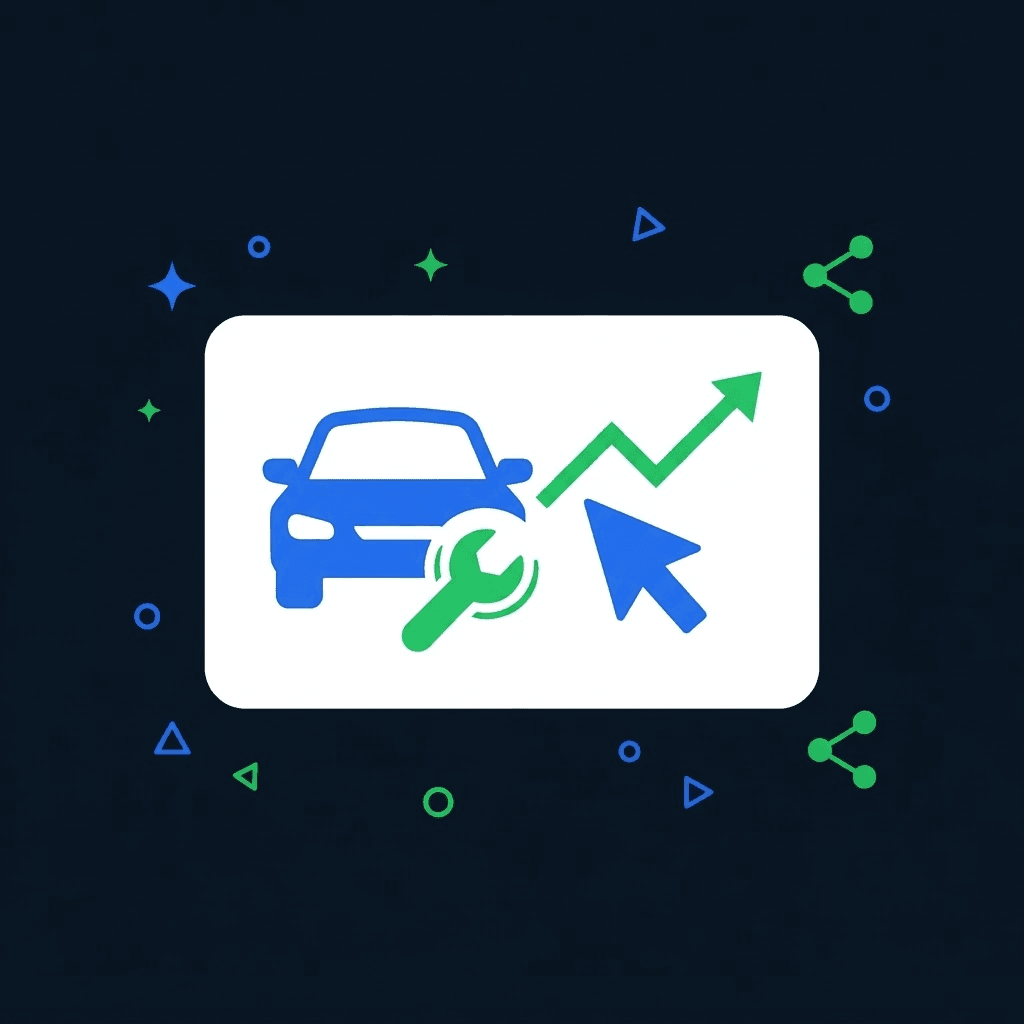
When a Racine driver hears a grinding brake or sees a check-engine light, they search and book fast — often the same day. Google Ads put your shop at the top of that search immediately, but only a disciplined setup keeps you from paying for clicks that never become jobs. This guide shows how to run auto repair ads that fill bays without wasting spend.
The short version
Profitable auto repair ads come from tight targeting (ready-to-book searches), relevant landing pages, and call tracking. Skip the broad keywords, send clicks to a page that matches the search, and measure cost per booked job — not clicks.
Why ads work for auto repair
Auto repair is urgent and local. A driver searching "brake repair Racine" wants a nearby, trustworthy shop now. Google Ads let you appear at the top for exactly those searches the moment you turn them on — a speed advantage that complements the slower compounding of local SEO.
Because intent is so high, well-targeted auto repair ads often convert efficiently. The risk isn't demand; it's wasting budget on the wrong searches and sending clicks to a page that doesn't close.
Same day
many urgent repair searches convert within hours
Top of page
ads appear above organic results instantly
Cost/job
the only ad metric that actually matters
Target ready-to-book searches only
The fastest way to waste an auto repair budget is bidding on broad terms. Focus your spend where intent is highest and margins are healthy.
- Service-specific terms: brake repair, check-engine diagnostics, oil change, transmission
- Local modifiers so you only pay for drivers in your service area
- Negative keywords to exclude DIY, parts-only, and job-seeker searches
- Ad scheduling weighted to your open hours when you can answer
Negative keywords are your budget's best friend
Adding negatives like 'free,' 'how to,' 'parts,' and 'jobs' filters out searchers who will never book. This one habit protects a meaningful slice of a small shop's budget every month.
Send clicks to a page that closes
Most wasted ad spend dies on the landing page. A click for "brake repair" should land on a brake repair page — not a generic homepage. A strong landing page has a clear headline matching the search, trust signals, and an obvious way to book.
- Headline matches the searched service
- Tap-to-call button above the fold on mobile
- Reviews and any relevant certifications for trust
- Simple appointment request form
- Fast load time so impatient drivers don't bounce
If your ads are running but not converting, the google-ads-not-working guide walks through the usual causes. Often it's the landing page, not the campaign, that's the weak link.
Track cost per booked job
Clicks and impressions are noise. What matters is how much you pay for each booked repair. Set up call tracking and form tracking so every dollar ties back to real work in the bays. Once you know your cost per job, you can confidently scale what's profitable and cut what isn't.
The auto shops that win with Google Ads aren't spending the most. They're spending the smartest — tight targeting, a landing page that matches the search, and relentless tracking of cost per booked job.
Pair ads with SEO for the long game
Ads deliver immediate calls, but they stop the moment you pause them. Running local SEO alongside builds an asset that keeps producing calls without a per-click cost. Our comparison of Google Ads vs SEO explains how to balance the two as you grow.
Done right, Google Ads keep a Racine auto shop's bays full during slow stretches and capture urgent, high-intent drivers year-round. Target ready-to-book searches, close them with a relevant page, and measure cost per job — then let SEO compound underneath for durable growth.
Want your ad spend reviewed for waste? Request a free marketing audit or book a call. Explore our work with local service businesses.
Frequently asked questions
They can be, when they target ready-to-book searches like 'brake repair near me' rather than broad terms. The advantage of ads is speed — you appear at the top the day you launch, while SEO builds underneath. The key is tight targeting so you pay for drivers who are ready to book, not tire-kickers.
Enough to gather meaningful data in your service area without overextending — many local shops start modestly and scale what works. What matters more than the number is tracking cost per booked job, so you know your true return rather than just clicks.
Usually one of three reasons: they send clicks to a slow or generic homepage instead of a relevant page, they target overly broad keywords, or calls aren't being tracked so you can't tell what's working. Fixing the landing page and targeting typically has the biggest impact.
Want a website that actually generates customers?
Get a personalized website and marketing plan based on your business, your goals, and the customers you want to reach in Wisconsin.

Written by
Logen Doiel
Founder, Tech Turtle Marketing
Logen Doiel is the founder of Tech Turtle, a Wisconsin marketing partner that helps local and service-based businesses turn online attention into real customers. He works directly with every client — from the first audit to launch and beyond — building websites, local SEO, and advertising that work together to generate calls and leads, not just look good.